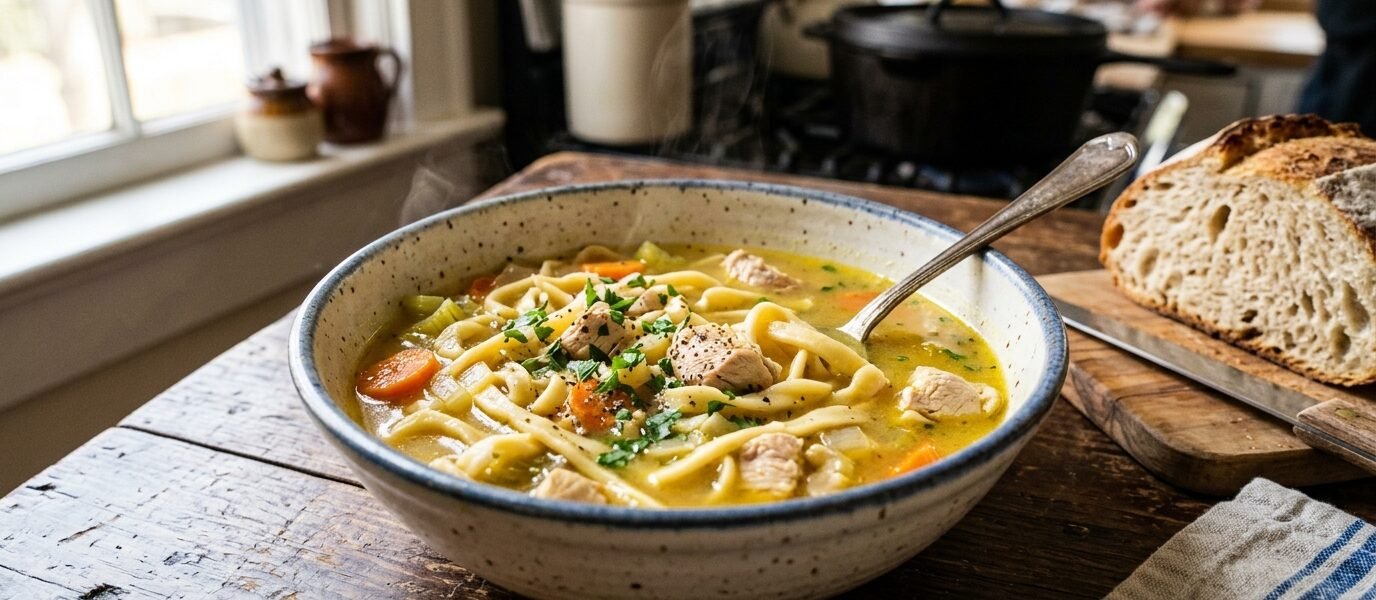

Few meals are as comforting as a warm bowl of Chicken Noodle Soup Homemade. Tender chicken, soft vegetables, flavorful broth, and noodles come together in one simple pot to create a satisfying meal for a cold evening, busy weeknight, or cozy family dinner.
What I particularly love about making chicken noodle soup at home is how flexible it is. You can use chicken breasts or thighs, choose your favorite noodles, adjust the vegetables, and season the broth according to your family’s taste.
This recipe keeps things simple while focusing on the flavors that make classic chicken noodle soup so comforting.
The basic combination of chicken, vegetables, broth, and noodles is also reflected in established chicken noodle soup recipes from sources such as USDA MyPlate and Health Canada.
My Experience Making Chicken Noodle Soup
For me, homemade soup is one of those recipes that feels more special than the amount of work involved suggests.
I started making chicken noodle soup when I wanted something comforting that could be prepared in one pot without requiring complicated ingredients. Over time, I found that the most important part isn’t adding dozens of seasonings—it’s building a flavorful broth and avoiding overcooked vegetables and noodles.
I also learned that noodles can continue absorbing broth after cooking. For that reason, I prefer adding them toward the end rather than letting them simmer for the entire cooking time.
This recipe is intended as a practical home-cooking version rather than a medical remedy. While chicken noodle soup may feel soothing when you’re under the weather, it shouldn’t be presented as a treatment for illness.
Why You’ll Love This Homemade Chicken Noodle Soup
Comforting
A warm bowl of chicken, vegetables, noodles, and broth makes an especially satisfying meal on chilly days.
Simple Ingredients
You don’t need an elaborate ingredient list to make a flavorful soup.
Protein-Rich
Chicken provides protein and makes the soup more substantial.
Packed With Vegetables
Carrots, celery, and onion add flavor, texture, and variety.
Family-Friendly
The familiar combination of chicken and noodles makes this a practical meal for many families.
Great for Meal Prep
You can make a larger batch and store portions for later, following safe food-storage practices.
What Is Chicken Noodle Soup?
Chicken noodle soup is a soup traditionally made with chicken, broth, vegetables, and noodles.
Common vegetables include:
- Carrots
- Celery
- Onion
Common seasonings include:
- Black pepper
- Parsley
- Thyme
- Garlic
- Salt
The exact ingredients vary from recipe to recipe.
A USDA chicken noodle soup recipe, for example, combines chicken with water, onion, celery, carrots, egg noodles, salt, pepper, and optional herbs.
Ingredients
For the Chicken Soup
- 1½ pounds boneless, skinless chicken breasts or thighs
- 8 cups chicken broth or low-sodium chicken stock
- 2 cups water
- 3 medium carrots, sliced
- 2 celery stalks, sliced
- 1 medium onion, diced
- 2 garlic cloves, minced
- 1 teaspoon dried thyme
- 2 tablespoons fresh parsley, chopped
- ½ teaspoon black pepper
- Salt, to taste
- 6 ounces egg noodles
- 1 tablespoon olive oil
Optional
- 1 bay leaf
- ½ teaspoon dried oregano
- A squeeze of fresh lemon juice
- Extra fresh parsley for serving
Ingredient Notes
Chicken
Both chicken breasts and chicken thighs work well.
Chicken breasts provide a leaner option with a mild flavor.
Chicken thighs contain more fat and can provide a richer, more tender texture.
For food safety, raw chicken should reach an internal temperature of 165°F (74°C) measured with a food thermometer.
Chicken Broth
Chicken broth forms the foundation of the soup.
You can use:
- Homemade chicken broth
- Store-bought chicken broth
- Chicken stock
- Low-sodium broth
If you’re using regular salted broth, taste the soup before adding additional salt.
Carrots
Carrots provide natural sweetness and color.
Slice them evenly so they cook at approximately the same rate.
Celery
Celery adds a subtle savory flavor and classic soup aroma.
Onion
Onion creates an important layer of flavor in the broth.
Yellow or white onion works well.
Garlic
A small amount of garlic adds depth without overpowering the chicken and vegetables.
Egg Noodles
Egg noodles are traditional in many versions of chicken noodle soup, but you can substitute:
- Rotini
- Ditalini
- Small shells
- Wide noodles
- Whole-wheat noodles
Keep in mind that different pasta shapes have different cooking times.
Can You Use Chicken Breast or Chicken Thighs?
Yes.
Chicken Breast
Best if you prefer:
- Leaner chicken
- Mild flavor
- Easy shredding
Chicken Thighs
Best if you prefer:
- More tender meat
- Richer flavor
- Slightly higher fat content
Either works in this homemade chicken noodle soup.
Fresh Broth vs. Store-Bought Broth
Homemade Broth
Homemade broth can provide a deeper flavor and allows you to control the ingredients.
Store-Bought Broth
Store-bought broth is convenient and works perfectly well for a quick weeknight soup.
If sodium is a concern, choosing a low-sodium broth gives you more control over the final seasoning.
Best Noodles for Chicken Noodle Soup
Egg noodles are one of the easiest choices, but they aren’t your only option.
| Noodle | Result |
|---|---|
| Egg noodles | Classic and tender |
| Wide noodles | Hearty |
| Ditalini | Small and easy to eat |
| Rotini | Holds broth well |
| Small shells | Family-friendly |
| Whole-wheat noodles | More substantial texture |
If you’re planning to store leftovers, consider cooking noodles separately and adding them to individual servings. This can help prevent them from becoming overly soft as they sit in the broth.
How to Make More Flavorful Chicken Noodle Soup
The secret isn’t necessarily more seasoning.
Instead, build flavor gradually.
Start With Aromatics
Sautéing onion, carrots, celery, and garlic briefly in olive oil creates a flavorful foundation.
Use Good Broth
The broth makes up most of the soup, so its flavor matters.
Season Gradually
Add some seasoning during cooking, then taste before serving.
Add Fresh Herbs
Fresh parsley at the end can brighten the flavor.
Don’t Overcook the Noodles
Add noodles toward the end so they remain tender rather than mushy.
Is Homemade Chicken Noodle Soup Healthy?
It can be part of a balanced meal, depending on the ingredients and portion size.
Chicken provides protein, while vegetables such as carrots and celery add nutrients and fiber. The noodles provide carbohydrates, and the broth contributes flavor and fluid.
However, nutrition varies significantly depending on the broth, noodles, chicken, salt, oil, and serving size.
It’s more accurate to describe this as a comforting homemade meal with chicken and vegetables rather than claiming that chicken noodle soup is automatically “healthy” or a cure for illness.
Food Safety Before Cooking
Chicken requires careful handling.
USDA food-safety guidance recommends:
- Washing hands before preparing food.
- Keeping raw chicken separate from ready-to-eat foods.
- Using a food thermometer.
- Cooking chicken to 165°F (74°C).
- Refrigerating perishable leftovers promptly.
One important point: don’t wash raw chicken in the sink. Washing can spread bacteria around the kitchen through splashes.
A Note About Canning This Soup
This recipe is intended for refrigerator or freezer storage, not shelf-stable canning.
If you want to can homemade chicken soup, use a research-tested pressure-canning procedure rather than simply placing cooked soup into jars.
The National Center for Home Food Preservation specifically warns that noodles and other pasta, rice, flour, cream, milk, and other thickening ingredients should not be included when pressure-canning soup according to its tested soup procedure.
So, for this recipe, refrigerating or freezing is the appropriate storage approach.
How to Make Homemade Chicken Noodle Soup
Step 1: Prepare the Vegetables
Wash and prepare the vegetables.
- Dice the onion.
- Slice the carrots.
- Slice the celery.
- Mince the garlic.
- Chop the fresh parsley.
Try to keep the carrot and celery pieces relatively similar in size so they cook evenly.
Step 2: Sauté the Aromatics
Place a large soup pot or Dutch oven over medium heat.
Add 1 tablespoon olive oil.
Add the:
- Onion
- Carrots
- Celery
Cook for about 4–5 minutes, stirring occasionally, until the vegetables begin to soften.
Add the minced garlic and cook for another 30 seconds.
This short sauté helps develop the flavor of the soup before the broth is added.
Step 3: Add the Broth
Pour in:
- 8 cups chicken broth
- 2 cups water
Add:
- Thyme
- Black pepper
- Bay leaf, if using
Stir everything together.
Bring the liquid to a gentle simmer.
Step 4: Add the Chicken
Place the raw chicken breasts or thighs into the simmering broth.
Reduce the heat if necessary so the soup maintains a gentle simmer rather than a vigorous boil.
Cook until the chicken reaches an internal temperature of 165°F (74°C) when checked with a food thermometer.
The exact cooking time depends on the size and thickness of the chicken pieces.
Step 5: Remove and Shred the Chicken
Carefully remove the cooked chicken from the pot.
Place it on a clean plate or cutting board and allow it to rest briefly.
Using two forks, shred or chop the chicken into bite-sized pieces.
Return the chicken to the pot.
Step 6: Add the Noodles
Add the egg noodles to the simmering soup.
Cook according to the noodle package directions, usually until they are tender but still slightly firm.
Avoid overcooking them because they can continue absorbing broth after the soup is finished.
Step 7: Taste and Adjust
Remove the bay leaf if you used one.
Taste the soup.
Add salt gradually if needed.
You can also adjust:
- Black pepper
- Thyme
- Garlic
- Fresh parsley
Remember that the amount of salt needed depends heavily on the chicken broth you use.
Step 8: Add Fresh Parsley
Turn off the heat and stir in the chopped fresh parsley.
Allow the soup to sit for a couple of minutes before serving.
The result should be a flavorful broth with tender chicken, vegetables, and perfectly cooked noodles.
How to Prevent Mushy Noodles
One of the most common problems with chicken noodle soup is noodles that become too soft.
Don’t Cook Them Too Early
Noodles don’t need to simmer for the entire cooking time.
Add them toward the end.
Don’t Overcook
Follow the cooking time on the package and check the noodles before the recommended time is complete.
Separate Noodles for Meal Prep
If you know you’ll have leftovers, consider cooking the noodles separately.
Store them separately from the soup and add them when reheating.
This keeps them from absorbing excessive broth while sitting in the refrigerator.
Expert Tips for Better Chicken Noodle Soup
Use Chicken Thighs for More Flavor
Chicken thighs tend to provide a richer flavor and remain tender when simmered.
Use Chicken Breast for a Leaner Option
Chicken breast works well if you prefer lighter meat.
Don’t Rush the Aromatics
Giving the onion, carrots, celery, and garlic a few minutes to soften creates a better flavor base.
Taste Before Adding Salt
Broths vary considerably in sodium content.
Taste first, then season.
Add Fresh Herbs at the End
Fresh parsley added near the end gives the soup a brighter flavor.
Don’t Boil Aggressively
A gentle simmer is sufficient. A hard boil can make the chicken tougher and cause the vegetables to become overly soft.
Common Mistakes to Avoid
Adding Everything at Once
Chicken, vegetables, and noodles have different cooking times.
Adding everything simultaneously can result in overcooked noodles or undercooked vegetables.
Using Too Much Salt
Store-bought broth may already contain significant sodium.
Always taste before adding extra salt.
Overcooking the Chicken
Use a thermometer rather than relying solely on cooking time.
Chicken should reach 165°F (74°C) internally.
Overfilling the Pot
Leave enough room for the broth and ingredients to simmer comfortably.
Adding Noodles Too Early
This is one of the easiest ways to end up with mushy noodles.
Homemade Chicken Noodle Soup Variations
Classic Chicken Noodle Soup
Keep the recipe simple with:
- Chicken
- Egg noodles
- Carrots
- Celery
- Onion
- Chicken broth
- Thyme
- Parsley
This is the traditional-style combination.
Garlic Chicken Noodle Soup
Increase the garlic slightly for a stronger savory flavor.
You can also add extra parsley.
Vegetable Chicken Noodle Soup
Add additional vegetables such as:
- Peas
- Corn
- Green beans
- Spinach
- Zucchini
Add delicate vegetables toward the end so they don’t become overcooked.
Lemon Chicken Noodle Soup
Add a small amount of fresh lemon juice immediately before serving.
The acidity can brighten the rich broth.
Start with a small amount and adjust according to taste.
Creamy Chicken Noodle Soup
For a creamy variation, prepare the basic chicken soup and add a small amount of cream toward the end.
Avoid boiling aggressively after adding dairy.
Herb Chicken Noodle Soup
Experiment with:
- Fresh parsley
- Thyme
- Rosemary
- Dill
Use herbs moderately so they complement rather than overpower the chicken broth.
Can I Make Chicken Noodle Soup in a Slow Cooker?
Yes, but the noodles should generally be added near the end rather than cooking for the entire slow-cooking period.
A practical method is:
- Add chicken, broth, vegetables, and seasonings to the slow cooker.
- Cook until the chicken is completely cooked.
- Remove and shred the chicken.
- Return the chicken to the slow cooker.
- Add noodles toward the end.
- Cook until the noodles are tender.
Always verify that the chicken reaches 165°F (74°C) internally.
Can I Make This Soup Ahead of Time?
Yes.
Chicken noodle soup can be prepared ahead for convenient meals.
However, if you expect to store it for several days, consider cooking the noodles separately.
This helps preserve their texture.
How to Store Chicken Noodle Soup Homemade?
Allow the soup to cool appropriately and transfer it to shallow containers for quicker cooling.
Keep it refrigerated at 40°F (4°C) or below.
According to USDA guidance, refrigerated leftovers should generally be used within 3–4 days.
If you won’t eat the soup within that period, freezing is a better option.
Can You Freeze Chicken Noodle Soup?
Yes, but noodles can become softer after freezing and thawing.
For better results:
- Prepare the soup without noodles.
- Cool it safely.
- Freeze the soup in airtight freezer-safe containers.
- Thaw in the refrigerator.
- Reheat thoroughly.
- Cook fresh noodles separately and add them to the reheated soup.
This method gives you a much better noodle texture.
How to Reheat Chicken Noodle Soup
Stovetop
Place the soup in a saucepan and heat over medium heat, stirring occasionally until thoroughly hot.
Microwave
Place an appropriate portion in a microwave-safe container and heat in intervals, stirring between intervals.
Be careful when removing the container because soup can become extremely hot.
What to Serve With Chicken Noodle Soup
Although the soup can be a complete meal on its own, you can serve it with:
- Crusty bread
- Garlic bread
- Dinner rolls
- Toast
- Green salad
- Roasted vegetables
- Grilled cheese sandwich
- Simple cucumber salad
For a lighter meal, pair a smaller bowl of soup with a fresh salad.
Meal Prep Tip
For easy weekday meals, prepare a large batch of the chicken-and-vegetable broth.
Divide it into meal-sized containers and refrigerate or freeze.
When you’re ready to eat, reheat the soup and add freshly cooked noodles.
This gives you the convenience of homemade chicken soup without sacrificing noodle texture.
Nutrition Information
Approximate nutrition per serving will vary depending on the chicken, broth, noodles, oil, and serving size used.
| Nutrient | Approximate Amount |
|---|---|
| Calories | 330 kcal |
| Protein | 32 g |
| Carbohydrates | 31 g |
| Fat | 9 g |
| Fiber | 3 g |
| Sodium | Varies significantly |
Important: These numbers are estimates, not laboratory analysis. The sodium content can vary considerably between homemade and commercially prepared chicken broth.
Frequently Asked Questions
What is chicken noodle soup made of?
Chicken noodle soup is typically made with chicken, broth, noodles, and vegetables such as carrots, celery, and onion, along with herbs and seasonings.
How do you make homemade chicken noodle soup?
Sauté the vegetables and garlic, add broth and chicken, cook the chicken to 165°F (74°C), shred it, then return it to the soup and add noodles near the end of cooking.
What noodles are best for chicken noodle soup?
Egg noodles are a classic choice, but small pasta shapes, wide noodles, rotini, and other pasta can also work.
How do I keep noodles from getting mushy in chicken noodle soup?
Add noodles toward the end of cooking and avoid overcooking them. For leftovers, storing cooked noodles separately from the soup gives the best texture.
Can I use leftover cooked chicken?
Yes. Shredded leftover cooked chicken can be added to the broth toward the end of cooking. Make sure the leftover chicken has been stored safely.
Can I freeze homemade chicken noodle soup?
Yes, but noodles may become softer after freezing and thawing. For better texture, freeze the soup without noodles and add freshly cooked noodles when reheating.
How long does chicken noodle soup last in the refrigerator?
Properly refrigerated leftovers should generally be used within 3–4 days.
Can I make chicken noodle soup without celery?
Yes. You can leave celery out or replace it with another vegetable such as zucchini, peas, or additional carrots.
Can I make chicken noodle soup with chicken thighs?
Absolutely. Chicken thighs can provide a richer flavor and tender texture.
Is homemade chicken noodle soup healthy?
It can be part of a balanced diet because it can provide protein, vegetables, and carbohydrates, but its nutritional profile depends on the ingredients and portion size.
How do you make chicken noodle soup from scratch?
To make chicken noodle soup from scratch, sauté onion, carrots, celery, and garlic, simmer them with chicken and broth, cook the chicken to 165°F (74°C), shred it, then add noodles and cook until tender.
How long should chicken cook in soup?
Chicken should be cooked until it reaches an internal temperature of 165°F (74°C). Cooking time varies according to the size and type of chicken used.
When should I add noodles to chicken soup?
Add noodles during the final stage of cooking, following their package cooking time, to help prevent them from becoming overly soft.
Can chicken noodle soup be made ahead?
Yes. It can be prepared ahead and refrigerated or frozen. For the best noodle texture, store the noodles separately and combine them when serving.
References
For readers who want to verify the food-safety information:
- USDA Food Safety and Inspection Service: Safe food handling and poultry cooking guidance.
- National Center for Home Food Preservation: Tested procedures for preserving soups.
- USDA MyPlate: General guidance on building balanced meals.
Also Check other recipes on our blog
- Mexican Omelet Recipe — for another easy savory meal.
- Chickpea Salad Recipes — for a lighter lunch option.
- Zucchini Bread Recipe — for a homemade baked treat.
- Keto Tortilla Recipes — for homemade tortilla-based meals.
- Kids Lunch Box Meals — for family-friendly packed lunch ideas.
- Back to School Cookies — for a school-themed dessert.
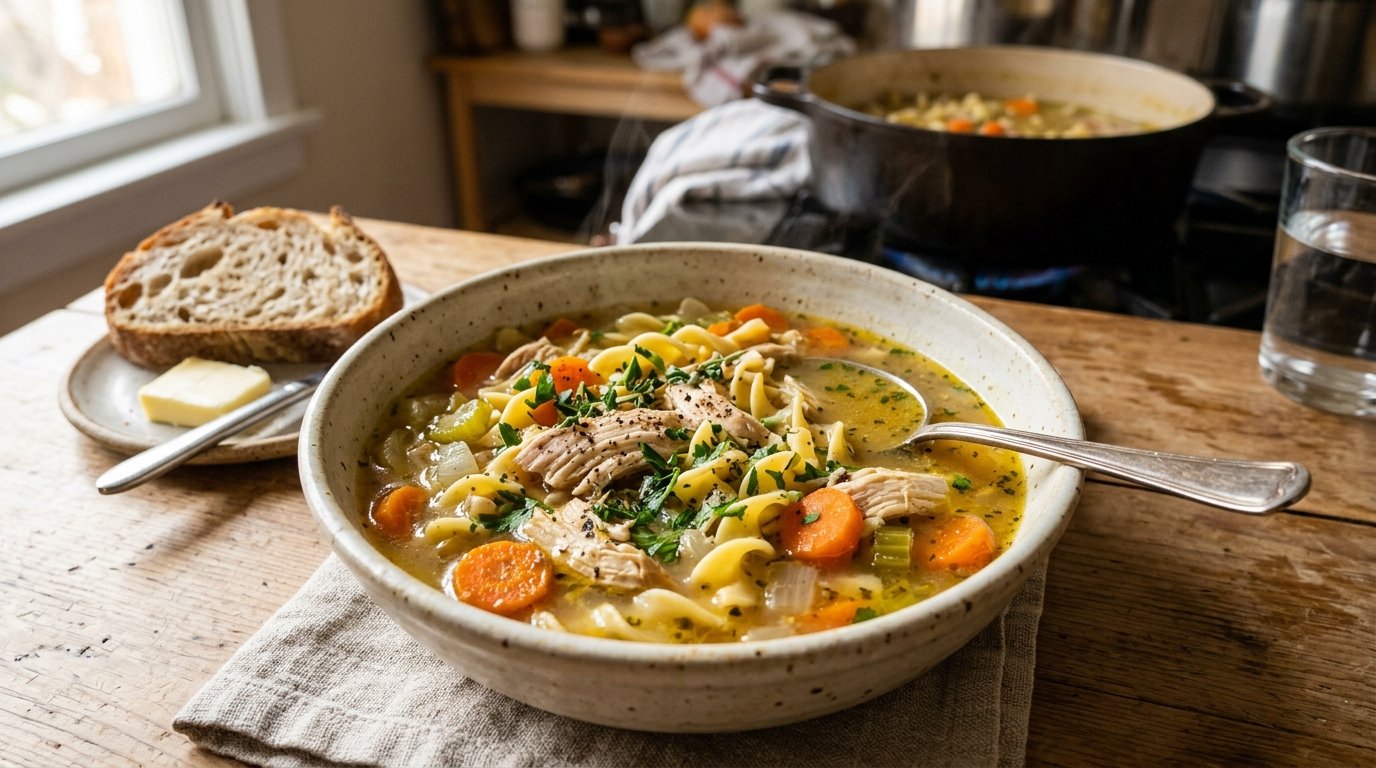
Chicken Noodle Soup Homemade
A comforting homemade chicken noodle soup made with tender chicken, egg noodles, carrots, celery, onion, garlic, and flavorful chicken broth. This simple one-pot recipe is ideal for a cozy family dinner or make-ahead meal.
- Total Time: 1 hour
- Yield: 6
Ingredients
- 1½ pounds boneless, skinless chicken breasts or thighs
- 8 cups chicken broth
- 2 cups water
- 3 medium carrots, sliced
- 2 celery stalks, sliced
- 1 medium onion, diced
- 2 garlic cloves, minced
- 6 ounces egg noodles
- 1 tablespoon olive oil
- 1 teaspoon dried thyme
- ½ teaspoon black pepper
- Salt, to taste
- 2 tablespoons fresh parsley, chopped
- 1 bay leaf, optional
Instructions
- Heat olive oil in a large soup pot over medium heat.
- Add onion, carrots, and celery and sauté for 4–5 minutes.
- Add garlic and cook for about 30 seconds.
- Pour in chicken broth and water.
- Add thyme, black pepper, and bay leaf if using.
- Bring the broth to a gentle simmer.
- Add the chicken and cook until it reaches 165°F (74°C) internally.
- Remove the chicken, shred it with two forks, and return it to the pot.
- Add the egg noodles and cook according to the package directions until tender.
- Remove the bay leaf, taste, and adjust the seasoning.
- Stir in fresh parsley and serve warm.
Notes
- Use chicken thighs for a richer flavor or chicken breasts for a leaner option.
- Taste the broth before adding salt.
- Add noodles near the end to help prevent them from becoming mushy.
- For meal prep, cook noodles separately and add them when serving.
- Refrigerate leftovers promptly and use them within the recommended storage period.
- Prep Time: 15
- Cook Time: 35 to 45
- Category: Appetizer
- Method: Boiling
- Cuisine: American
How We Researched This Recipe
This recipe was developed around traditional homemade chicken noodle soup preparation, practical home-cooking techniques, and food-safety principles.
The recipe structure focuses on building flavor from vegetables and aromatics, cooking chicken to a safe internal temperature, and adding noodles toward the end to preserve their texture.
Food-safety information was checked against USDA guidance, particularly the recommendation that poultry reach 165°F (74°C) and that refrigerated leftovers generally be consumed within 3–4 days.
The National Center for Home Food Preservation was also considered for storage guidance; its tested soup-canning guidance should be followed rather than improvising a shelf-stable canning method.
Editorial Policy
At Moonlight For All, we aim to provide recipes that are practical, clearly written, and useful for home cooks.
We distinguish general cooking information from medical or individualized nutrition advice. When a recipe involves food allergies, medical diets, or specific nutritional requirements, readers should consult an appropriately qualified professional.
Food-safety recommendations are based on established food-safety guidance, and readers should follow current official recommendations.