Herb and Garlic Bread: A Bakery-Style Homemade Bread You’ll Make Again and Again

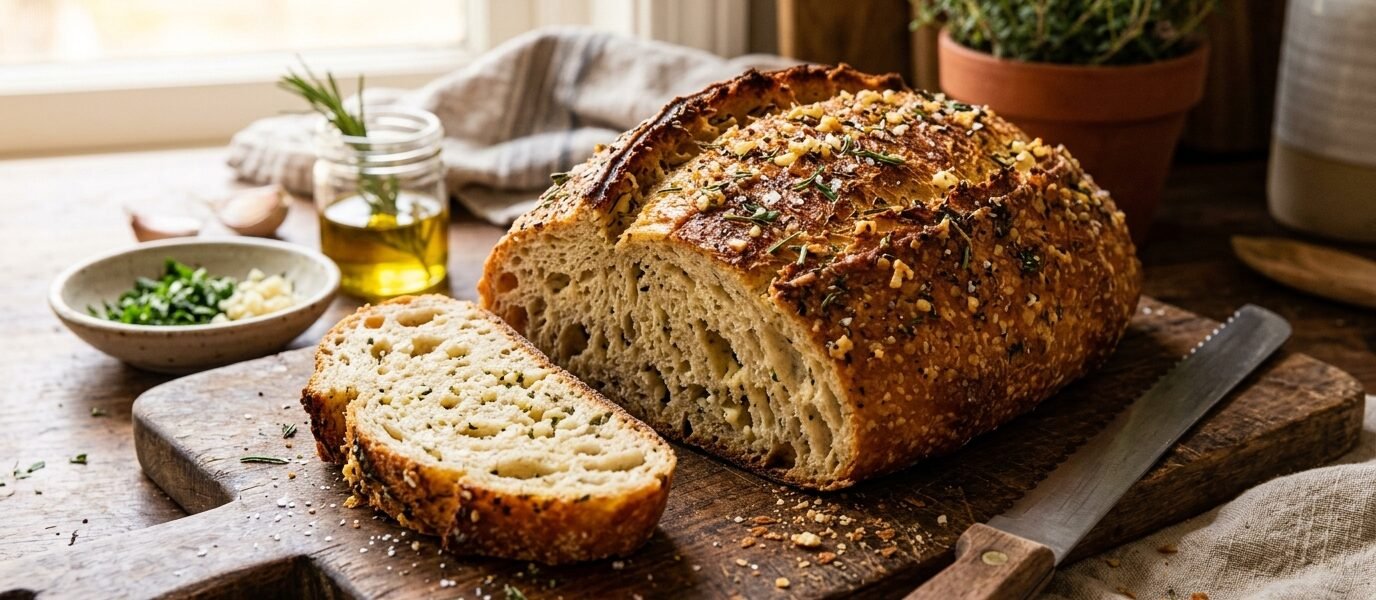
Freshly baked Herb and Garlic Bread is one of those recipes that instantly makes a kitchen smell warm and inviting. With a golden crust, soft interior, aromatic herbs, and rich garlic butter, it’s a versatile bread that pairs beautifully with soups, salads, pasta, grilled meats, and Mediterranean-inspired meals.
After baking homemade bread for years, I’ve found that using fresh garlic, quality herbs, and allowing enough time for the dough to rise makes all the difference. While store-bought garlic bread is convenient, nothing compares to the flavor and texture of bread made from scratch.
In this comprehensive guide, you’ll learn how to make soft, flavorful herb and garlic bread, discover ingredient substitutions, baking tips, storage methods, nutrition information, and common mistakes to avoid.
Quick Answer
Herb and garlic bread is a yeast-based bread flavored with garlic, butter or olive oil, and aromatic herbs such as parsley, oregano, rosemary, and thyme. It can be baked as a loaf, rolls, breadsticks, or pull-apart bread and served as a side dish or appetizer.
Why You’ll Love This Recipe
✔ Soft and fluffy interior
✔ Golden crispy crust
✔ Rich garlic flavor
✔ Fresh herbs in every bite
✔ Easy enough for beginners
✔ Freezer-friendly
✔ Perfect for family dinners
✔ Great with soups and pasta
What Is Herb and Garlic Bread?
Herb and garlic bread is a savory bread that combines freshly baked dough with garlic and herbs. While garlic bread is commonly associated with Italian-American cuisine, similar herb-flavored breads are enjoyed throughout the Mediterranean and many other parts of the world.
Common herbs include:
- Parsley
- Oregano
- Basil
- Rosemary
- Thyme
- Chives
Ingredients
For the Dough
- 3½ cups bread flour (or all-purpose flour)
- 2¼ teaspoons active dry yeast
- 1 cup warm water (about 105–110°F / 40–43°C)
- 2 tablespoons olive oil
- 1 tablespoon sugar or honey
- 1 teaspoon salt
Herb Garlic Butter
- 4 tablespoons unsalted butter, softened
- 2 tablespoons extra virgin olive oil
- 5 cloves garlic, finely minced or roasted
- 2 tablespoons chopped fresh parsley
- 1 teaspoon dried oregano
- 1 teaspoon fresh thyme (or ½ teaspoon dried)
- ½ teaspoon rosemary, finely chopped
- ¼ teaspoon black pepper
Optional:
- Parmesan cheese
- Red pepper flakes
- Sesame seeds
Equipment You’ll Need
- Large mixing bowl
- Measuring cups and spoons
- Stand mixer (optional)
- Baking tray or loaf pan
- Pastry brush
- Kitchen towel
How to Make Herb and Garlic Bread
Step 1: Activate the Yeast
Mix warm water, sugar, and yeast.
Allow it to sit for 5–10 minutes until foamy.
Step 2: Make the Dough
Combine flour and salt.
Add yeast mixture and olive oil.
Mix until a dough forms.
Knead for about 8–10 minutes until smooth and elastic.
Step 3: First Rise
Place the dough in a lightly oiled bowl.
Cover and let it rise for about 1 hour or until doubled in size.
Step 4: Prepare the Garlic Herb Butter
Mix together:
- Butter
- Olive oil
- Garlic
- Parsley
- Oregano
- Rosemary
- Thyme
- Black pepper
Set aside.
Step 5: Shape the Bread
Punch down the dough.
Shape into:
- Loaf
- Round boule
- Dinner rolls
- Breadsticks
- Pull-apart loaf
Brush generously with the garlic herb mixture.
Step 6: Second Rise
Cover and allow to rise again for 30–40 minutes.
Step 7: Bake
Bake in a preheated oven at 375°F (190°C) for 25–30 minutes, or until the bread is golden brown and sounds hollow when tapped on the bottom.
Brush with more garlic herb butter immediately after baking for extra flavor.
Why This Recipe Works
The combination of yeast fermentation, olive oil, and butter creates a tender crumb while garlic and herbs infuse the bread with rich aroma and flavor. Brushing additional herb butter after baking enhances moisture and gives the crust a glossy finish.
Best Herbs for Garlic Bread
Each herb brings a unique flavor:
| Herb | Flavor Profile |
|---|---|
| Parsley | Fresh and mild |
| Rosemary | Woody and aromatic |
| Thyme | Earthy |
| Oregano | Warm and savory |
| Basil | Sweet and fragrant |
| Chives | Mild onion-like flavor |
Using a mix of herbs creates a more balanced taste than relying on a single herb.
Variations
Cheesy Herb Garlic Bread
Sprinkle grated Parmesan or mozzarella over the bread during the last 5–10 minutes of baking.
Whole Wheat Version
Replace up to half of the bread flour with whole wheat flour for added fiber while maintaining a soft texture.
Vegan Herb Garlic Bread
Use:
- Vegan butter
- Olive oil
- Plant-based milk if needed
Roasted Garlic Bread
Roast whole garlic bulbs until soft and caramelized, then mash into the butter mixture for a sweeter, milder garlic flavor.
Nutrition (Approximate Per Slice)
| Nutrient | Amount |
|---|---|
| Calories | 180–220 |
| Protein | 5–6 g |
| Carbohydrates | 26–30 g |
| Fat | 7–9 g |
| Fiber | 1–2 g |
Values are estimates and depend on ingredients and serving size. Also check Keto Tortilla Recipes: Soft, Low-Carb Wraps You Can Make at Home
What to Serve with Herb and Garlic Bread
This bread pairs well with:
- Tomato soup
- Lentil soup
- Creamy mushroom soup
- Chicken noodle soup
- Pasta dishes
- Fresh salads
- Grilled chicken
- Baked fish
- Mediterranean dips such as hummus or baba ganoush
Storage Tips
- Store at room temperature in an airtight container for up to 2 days.
- Refrigerate for up to 5 days if your kitchen is warm, though refrigeration may dry the bread slightly.
- Freeze for up to 3 months. Wrap tightly and thaw at room temperature before reheating.
To refresh, warm the bread in a 350°F (175°C) oven for 5–10 minutes.
Common Mistakes to Avoid
- Using water that is too hot, which can kill the yeast.
- Not allowing the dough enough time to rise.
- Adding too much flour, resulting in a dense loaf.
- Burning the garlic—raw or roasted garlic should be mixed into the butter, not cooked excessively.
- Overbaking, which can dry out the bread.
Frequently Asked Questions
Can I use dried herbs instead of fresh?
Yes. Use about one-third the amount of dried herbs compared to fresh, as dried herbs are more concentrated in flavor.
Can I make the dough ahead of time?
Yes. After the first rise, refrigerate the dough overnight. Let it come to room temperature before shaping and baking.
Is bread flour necessary?
Bread flour gives a chewier texture, but all-purpose flour also produces excellent results.
Can I use roasted garlic?
Absolutely. Roasted garlic has a mellow, slightly sweet flavor that blends beautifully into the herb butter.
Can I make this gluten-free?
Yes, but you’ll need a gluten-free bread flour blend designed for yeast baking. Results may differ in texture.
My Personal Take
Homemade herb and garlic bread is one of those recipes that feels special without being difficult. I enjoy using a combination of parsley, rosemary, and thyme because it creates a fresh, balanced flavor that complements many meals. Brushing the bread with garlic butter both before and after baking gives it an irresistible aroma and keeps the crust flavorful without becoming overly greasy. It’s a recipe I return to whenever I want a comforting side that pairs with almost anything.
Final Thoughts
Herb and garlic bread is more than just a side dish—it’s a versatile homemade bread that brings warmth and flavor to the table. With simple pantry ingredients, fresh herbs, and a little patience while the dough rises, you can create bakery-style bread that’s soft inside, crisp outside, and bursting with garlic flavor.
Whether you’re serving it with soup, pasta, grilled meats, or Mediterranean-inspired dishes, this recipe is sure to become a favorite in your kitchen.