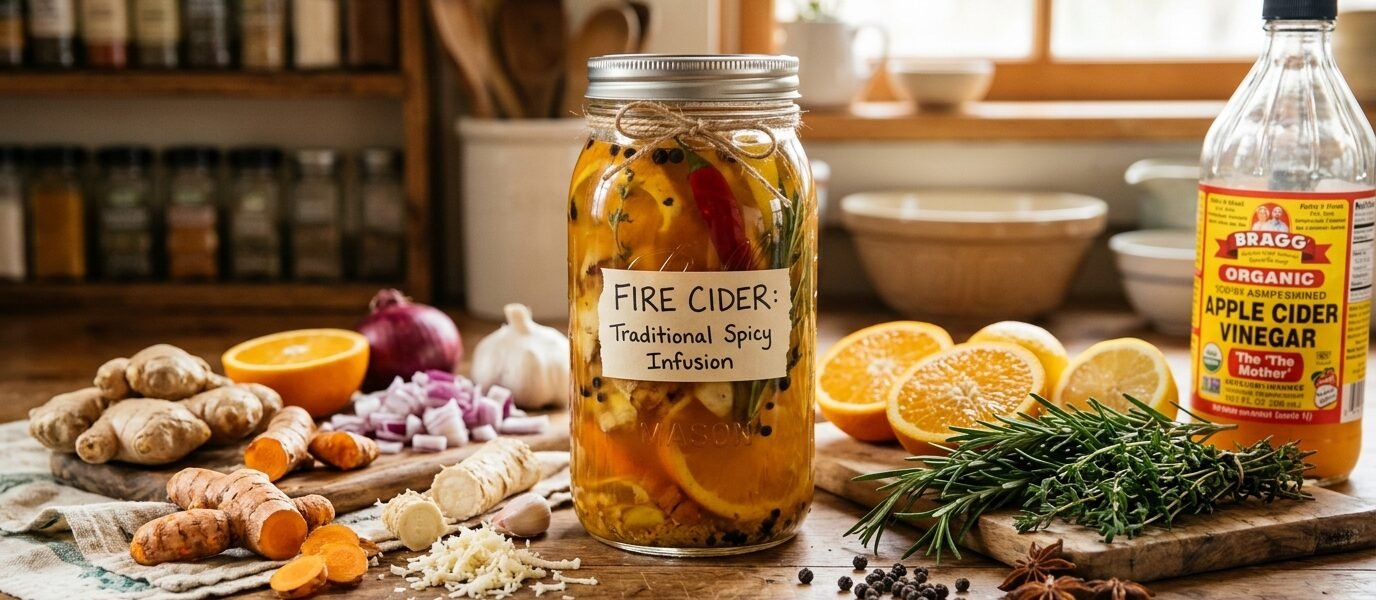

If you enjoy bold, spicy, and tangy flavors, this fire cider recipe is unlike an ordinary homemade drink. Made by infusing apple cider vinegar with ingredients such as ginger, garlic, onion, horseradish, and hot peppers, fire cider creates a powerful combination of sharp, pungent, spicy, and slightly sweet flavors.
At first glance, the ingredient list may seem unusual. Garlic, onion, ginger, hot peppers, and vinegar aren’t ingredients most people expect to combine in one recipe. But after the ingredients infuse together, they create a concentrated flavored vinegar that can be used in small amounts in dressings, marinades, sauces, and other recipes.
One of the reasons homemade fire cider has become popular is its flexibility. You can make it milder by reducing the peppers and horseradish, increase the ginger for more warmth, or add a little honey after straining to balance the strong vinegar flavor.
However, making a homemade fire cider recipe requires more attention than simply filling a jar with fresh ingredients and leaving it for several weeks. Because fresh fruits, vegetables, roots, and herbs are infused for an extended period, proper preparation, sanitation, heating, and storage are important.
In this complete guide, you’ll learn how to make a flavorful, safety-focused fire cider using apple cider vinegar and traditional ingredients. You’ll also find ingredient tips, flavor variations, storage guidance, common mistakes to avoid, a printable recipe card, frequently asked questions, and evidence-based information about commonly made health claims.
What You’ll Learn in This Fire Cider Recipe Guide
In this guide, we’ll cover:
- What fire cider is
- The traditional ingredients used in fire cider
- How to make a homemade fire cider safely
- How to adjust the spice level
- How long to infuse fire cider
- How to strain and sweeten it
- Storage and spoilage guidance
- Ways to use it as a culinary ingredient
- Common mistakes to avoid
- Frequently asked questions
- A complete printable recipe card
Quick Answer: Fire cider is a spicy apple cider vinegar infusion commonly made with ingredients such as ginger, garlic, onion, horseradish, and hot peppers. Honey is often added after straining to balance the strong, tangy flavor.
My Experience With Homemade Fire Cider
What makes this recipe interesting to me is that it is completely different from an ordinary drink recipe.
You don’t simply blend ingredients and serve them immediately. Instead, the vegetables, roots, herbs, and spices infuse their flavors into the vinegar over time.
The first time you see all the ingredients together—garlic, onion, ginger, horseradish, and hot peppers—you might expect the final result to be overwhelmingly intense. And honestly, it is definitely strong.
But after infusing, straining, and balancing the mixture with honey, the flavors become more integrated.
I prefer thinking of homemade fire cider as a spicy, sour, sweet vinegar infusion that can be used in small culinary amounts or incorporated into recipes, rather than treating it as a miracle wellness drink.
Why You’ll Love This Fire Cider Recipe
Bold and Spicy Flavor
Ginger, horseradish, garlic, and peppers create the characteristic “fire” in fire cider.
Apple Cider Vinegar Base
Apple cider vinegar provides the sharp, tangy foundation.
Sweet and Sour Balance
Honey can soften the intensity of the vinegar and spicy ingredients.
Highly Customizable
You can adjust the amount of pepper, ginger, horseradish, turmeric, and herbs according to your taste.
Useful Beyond Drinking
Fire cider can also be used in small amounts in:
- Salad dressings
- Marinades
- Sauces
- Soups
- Vegetable dishes
Traditional and modern recipes commonly use the same core ingredients while varying optional additions.
Important Health and Safety Note
Fire cider is often promoted online as an “immune booster” or natural remedy.
However, there is no good evidence that fire cider prevents or cures illness. Individual ingredients may have nutritional or biological properties, but combining and infusing them does not automatically create a proven medical treatment.
Because it is acidic and often spicy, fire cider may also cause discomfort for some people, including:
- Stomach irritation
- Indigestion
- Acid reflux
- Mouth burning
- Diarrhea
- Tooth enamel erosion with frequent exposure to acidic drinks
People with digestive conditions or other individual health concerns should be cautious, and anyone taking medications or managing a medical condition should seek individualized advice from a qualified healthcare professional.
Fire Cider Ingredients
For this recipe, you will need:
- 2 cups apple cider vinegar
- ½ cup fresh ginger, thinly sliced or grated
- ¼ cup fresh horseradish, grated
- ½ medium onion, thinly sliced
- 5–6 garlic cloves, chopped
- 1 small hot pepper, sliced
- ½ teaspoon cayenne pepper, optional
- 1 teaspoon turmeric, or a small piece of fresh turmeric
- ½ lemon, thinly sliced, optional
- 1–2 tablespoons honey, adjusted to taste
Optional Herbs
You can also experiment with:
- Rosemary
- Thyme
- Parsley
- Black peppercorns
These ingredients are common variations in traditional-style fire cider recipes.
Ingredient Notes
Apple Cider Vinegar
Apple cider vinegar is the main liquid used to extract and carry the flavors of the other ingredients.
For a home food preparation, use a vinegar product intended for food use and follow safe handling practices.
Ginger
Fresh ginger contributes a warm, sharp flavor.
You can grate it for a stronger infusion or thinly slice it for easier preparation.
Horseradish
Horseradish gives fire cider much of its powerful pungency.
Fresh horseradish is traditionally used, but it can be difficult to find in some locations.
When grating it, work carefully because the fumes can be intense.
Garlic
Garlic contributes a strong savory flavor that becomes part of the vinegar infusion.
Use fresh garlic for the best flavor.
Onion
Onion adds another savory layer and helps create the traditional flavor profile.
Red, yellow, or white onion can work.
Hot Pepper
The pepper determines much of the recipe’s heat.
You can use:
- Jalapeño for moderate heat
- Cayenne pepper for more intensity
- Another fresh hot pepper according to your preference
Start with less if you are sensitive to spicy food.
Turmeric
Turmeric is optional but commonly added to modern variations.
It provides an earthy flavor and golden color.
Lemon
Lemon is optional and adds citrus flavor.
Because this is a long-infused food preparation, wash the lemon thoroughly before slicing and use clean equipment.
Honey
Honey is usually added after the vinegar has infused and been strained.
It helps balance the strong sour and spicy flavors.
You can add more or less depending on your taste.
How to Make Fire Cider Safely
This is one of the most important sections of a fire cider recipe.
A jar of raw vegetables sitting in vinegar should not automatically be assumed to be safe simply because vinegar is acidic. University of Minnesota Extension notes that adding fruits, vegetables, and spices can alter the food environment and introduce microorganisms. Its 2025 guidance recommends specific sanitation, ingredient ratios, and heating steps for safer flavored vinegar preparation.
Before You Begin
- Start with a clean kitchen.
- Clean and sanitize your preparation surfaces and utensils.
- Wash fruits and vegetables under clean running water.
- Use a clean, sanitized jar.
- Avoid overpacking the jar.
The University of Minnesota Extension recommends roughly 1 cup of added fruits and vegetables for every 2 cups of apple cider vinegar for its flavored-vinegar process.
A Safer Approach to Homemade Fire Cider
For safety-focused preparation, follow these general principles:
- Thinly slice the flavoring ingredients.
- Avoid packing excessive amounts of solid ingredients into the jar.
- Use a clean, sanitized jar.
- Heat the apple cider vinegar according to the food-safety process you are following.
- Use a thermometer where required rather than estimating temperatures.
- Keep the solid ingredients fully covered according to the tested preparation method.
- Strain out the solid ingredients before bottling.
University of Minnesota Extension’s fire cider guidance specifies heating vinegar to 190–195°F (just below boiling) and ensuring the mixture meets its stated time-and-temperature guidance during preparation. It also recommends an infusion period of 10 to 30 days, depending on desired strength, followed by straining before bottling.
For a blog recipe, this safety-focused approach is preferable to casually telling readers to leave fresh vegetables in vinegar for weeks without discussing sanitation and temperature considerations.
What Does Fire Cider Taste Like?
Fire cider has a combination of:
- Sour
- Spicy
- Sharp
- Pungent
- Slightly sweet flavors
The vinegar provides the sourness.
The ginger and horseradish provide heat and pungency.
Garlic and onion contribute savory flavors.
Hot peppers add additional spice.
Honey softens the overall intensity.
The final taste depends heavily on the proportions you use.
Can You Adjust the Ingredients?
Yes. One of the reasons homemade fire cider is popular is that the recipe is flexible.
For Less Heat
Reduce:
- Hot peppers
- Cayenne
- Horseradish
For More Ginger Flavor
Increase the amount of fresh ginger.
For More Citrus
Add a small amount of lemon according to your chosen tested process.
For More Sweetness
Add additional honey after straining.
For a More Herbal Flavor
Experiment with rosemary or thyme.
However, when making changes to a long-infused homemade vinegar product, remember that food safety is not determined only by taste. Follow an appropriate tested process rather than assuming that any ingredient combination will have the same safety characteristics.
How Long Should Fire Cider Infuse?
Traditional recipes often recommend approximately 3 to 6 weeks, while the University of Minnesota Extension’s safer flavored-vinegar guidance describes an infusion period of 10 to 30 days. The appropriate process depends on the recipe and food-safety method being followed.
For this article, I recommend prioritizing a safety-focused tested process over simply following the longest traditional steeping time.
Is Fire Cider a Drink or a Cooking Ingredient?
It can be used either way.
Because the flavor is extremely strong, many people prefer using a small amount rather than drinking a large serving.
Possible culinary uses include:
- Adding a small amount to salad dressing
- Mixing into marinades
- Using as part of a sauce
- Adding carefully to soups
- Diluting according to personal preference
Traditional recipe sources also describe using fire cider in culinary preparations rather than only consuming it on its own.
Common Mistakes to Avoid
Assuming Homemade Means Automatically Safe
Natural ingredients still require proper food handling.
Using Dirty Equipment
Long-infused preparations should start with clean and properly prepared equipment.
Overpacking the Jar
Too many solid ingredients can make it harder to follow the intended heating and infusion process safely.
Adding Too Much Pepper
You can always increase heat in future batches, but it is difficult to rescue an infusion that is painfully spicy.
How to Make Fire Cider
This section follows a safety-focused approach to making a homemade fire cider–style flavored vinegar. Because fresh fruits, vegetables, and spices can introduce microorganisms and alter the food environment, proper sanitation and heating matter.
Important: Fire cider is a strongly flavored vinegar infusion. It should not be presented as a proven treatment, cure, or prevention method for illness.
Step-by-Step Fire Cider Recipe
Step 1: Clean and Prepare Your Workspace
Before handling the ingredients:
- Clean your work surface.
- Clean and sanitize utensils and cutting boards.
- Use a clean, sanitized glass jar with a suitable lid.
- Wash fresh fruits and vegetables under clean running water.
Proper preparation is especially important for a long-infused vinegar recipe.
Step 2: Prepare the Ingredients
Thinly slice or chop:
- Fresh ginger
- Fresh horseradish
- Onion
- Garlic
- Hot pepper
- Lemon, if using
Thin slices help expose more surface area to the vinegar and make it easier for the mixture to heat adequately.
Avoid overpacking the jar with solid ingredients. The University of Minnesota Extension’s fire cider guidance recommends approximately 1 cup of fruits and vegetables for every 2 cups of apple cider vinegar.
Step 3: Add the Flavoring Ingredients to the Jar
Add your prepared ingredients to the sanitized jar.
For this version, the flavor combination can include:
- Ginger
- Horseradish
- Onion
- Garlic
- Hot pepper
- Turmeric
- Lemon, if desired
Do not tightly compress the ingredients.
Leave enough space for the hot vinegar to circulate around the solids.
Step 4: Heat the Apple Cider Vinegar
Pour the apple cider vinegar into a non-reactive saucepan.
Heat the vinegar to approximately 190–195°F (just below boiling).
Carefully pour the hot vinegar over the prepared ingredients.
According to the University of Minnesota Extension’s guidance, the entire mixture, including the center of the solid ingredients, should remain above 165°F for at least 1 minute and 12 seconds. A food thermometer should be used rather than estimating the temperature.
This step is one reason thinly sliced ingredients and avoiding an overpacked jar are important.
Step 5: Close the Jar
Once the ingredients are covered with the hot vinegar, secure a clean lid.
Make sure the flavoring ingredients remain covered by the vinegar.
Label the jar with:
- Preparation date
- Expected straining date
- Ingredients used
This is particularly useful when making several homemade infusions.
Step 6: Allow the Fire Cider to Infuse
Store the closed jar in a cool, dark location.
The University of Minnesota Extension recommends an infusion period of approximately 10 to 30 days, depending on how strong you want the flavor to become.
A shorter infusion generally produces a milder flavor, while a longer infusion creates a stronger and more pungent result.
Step 7: Strain the Fire Cider
Once your desired infusion time has passed, strain the vinegar to remove all solid ingredients.
You can use:
- A fine-mesh strainer
- Cheesecloth
- A coffee filter for smaller particles
The University of Minnesota Extension specifically recommends thoroughly removing the solid food particles before bottling, with a coffee filter useful for catching smaller pieces.
Transfer the strained vinegar to a clean container.
Step 8: Add Honey
Once the solid ingredients have been strained out, add honey gradually.
Start with:
1 tablespoon honey
Taste carefully and add more if desired.
Depending on the intensity of the vinegar and peppers, you may prefer 1–2 tablespoons or more.
Stir until the honey is fully incorporated.
The goal is not to make the mixture very sweet. The honey simply helps balance the sharp, spicy, and sour flavors.
How to Make Fire Cider Milder
Traditional fire cider can be extremely intense. If you prefer a gentler version, reduce the strongest ingredients.
Reduce the Heat
Use less:
- Hot pepper
- Cayenne pepper
- Horseradish
Increase Sweetness Carefully
Add a little more honey after straining.
Use More Ginger Than Pepper
Ginger provides a warming, sharp flavor without relying entirely on chili heat.
Use a Shorter Infusion Time
A shorter infusion within the tested 10–30 day range can result in a less intense flavor.
Fire Cider Flavor Variations
1. Classic Fire Cider
Use:
- Apple cider vinegar
- Ginger
- Garlic
- Onion
- Horseradish
- Hot pepper
- Honey
This produces the classic pungent and spicy profile.
2. Citrus Fire Cider
Add:
- Lemon
- Ginger
- Garlic
- Onion
- Apple cider vinegar
Citrus can give the infusion a brighter flavor.
Remember to follow the same sanitation and tested preparation principles when changing ingredients.
3. Turmeric and Ginger Fire Cider
For a more earthy flavor, include:
- Fresh ginger
- Turmeric
- Garlic
- Apple cider vinegar
- Honey
This variation is less focused on extreme heat and more focused on warm, earthy flavors.
4. Extra-Spicy Fire Cider
Increase the intensity with additional hot peppers.
However, add spicy ingredients cautiously. A batch that is too hot may be difficult to enjoy, and increasing sweetness does not always fully balance excessive heat.
5. Herb-Infused Fire Cider
For an herbal variation, consider small amounts of:
- Rosemary
- Thyme
Herbs can add a more aromatic flavor to the finished vinegar.
How to Use Fire Cider
Because the flavor is concentrated, start with a small amount.
You can use it as a flavorful ingredient in:
Salad Dressing
Whisk a small amount with olive oil and other dressing ingredients.
Marinades
Add a small amount to a savory marinade.
Sauces
Use it to add acidity and spice to sauces.
Soups
A small splash can add sharpness to certain soups and stews.
Vegetable Dishes
Use it carefully as a finishing vinegar for cooked vegetables.
Diluted Beverage
Some people dilute a small amount in water according to personal preference.
Because vinegar and spicy ingredients can be irritating for some people, individual tolerance varies.
Common Mistakes When Making Fire Cider
Using Too Many Fresh Ingredients
It may be tempting to fill the entire jar with ginger, garlic, onion, peppers, and other ingredients.
However, overpacking can interfere with adequate heating and makes it harder to follow a tested process.
Skipping Proper Cleaning
A long infusion should begin with a clean workspace and sanitized equipment.
Do not assume vinegar automatically eliminates every food-safety concern introduced by fresh ingredients.
Guessing the Temperature
For a safety-focused process, use a thermometer.
The recommended vinegar heating range in the University of Minnesota Extension process is 190–195°F, with the full mixture meeting its stated time-and-temperature requirement.
Overusing Hot Peppers
Fire cider should be flavorful, but extreme heat can overwhelm every other ingredient.
Start moderately.
You can always make a hotter batch next time.
Leaving Solid Ingredients in the Finished Product
Strain the vinegar thoroughly before bottling.
Removing solid food particles is part of the Extension process for finished fire cider.
How to Store Homemade Fire Cider
After bottling, store the finished fire cider according to the tested process you followed.
The University of Minnesota Extension states that its finished bottled fire cider should be kept in a cool, dark location, and once opened, it must be refrigerated.
If you have not followed a tested shelf-stable bottling process, a more conservative approach is to keep the finished product refrigerated.
Signs Homemade Fire Cider Should Be Discarded
Do not taste a questionable product to determine whether it is safe.
Discard the fire cider if you notice signs such as:
- Mold
- Bubbling
- Unexpected cloudiness
The University of Minnesota Extension specifically lists mold, bubbling, and cloudiness as spoilage signs for fire cider.
When in doubt, discard the product rather than tasting it.
Expert Tips for Better Fire Cider
Slice Ingredients Thinly
Thin slices improve flavor extraction and support the tested heating process.
Use a Thermometer
Temperature is important for safety. Avoid relying on visual guesses.
Don’t Overpack the Jar
Leave enough room for the vinegar to surround the ingredients.
Adjust Honey After Straining
The final flavor is easier to judge after the solids have been removed.
Label Your Jar
Write down the preparation and straining dates.
Start With Small Amounts
The final vinegar is concentrated and strongly flavored.
Can You Make Fire Cider Without Horseradish?
Yes, you can make a vinegar infusion without horseradish, although the flavor will be different and less pungent.
You can increase:
- Ginger
- Garlic
- Mild pepper
However, ingredient substitutions should still follow a safe preparation process rather than assuming every variation has identical preservation characteristics.
Can You Make Fire Cider Without Honey?
Yes.
Honey is primarily used to balance the flavor.
You can leave it unsweetened or adjust the finished flavor according to your preferences.
If using another sweetener, remember that recipe modifications can affect the finished product, particularly if you are attempting shelf-stable storage.
Approximate Amount Per Tablespoon
Nutrient Approximate Amount Calories 5–10 kcal Carbohydrates 1–2 g Sugar Varies Fat 0 g Protein 0 g These are general estimates only and should not be treated as a laboratory nutritional analysis.
Because the solid ingredients are strained out, the finished vinegar should not be assumed to provide the same nutritional value as eating the original whole ingredients.
How to Use Fire Cider
Think of homemade fire cider primarily as a strongly flavored vinegar ingredient.
You can use a small amount in:
Salad Dressings
Whisk a small amount with olive oil and other dressing ingredients.
Marinades
Add a small amount for acidity and spice.
Sauces
Use it carefully to add a sharp, tangy flavor.
Soups and Stews
A small splash can add acidity to savory dishes.
Roasted Vegetables
Use a small amount as a finishing flavor.
Diluted Drinks
Some people choose to dilute a small amount with water, but tolerance for acidic and spicy drinks varies.
Storage Guidance
After bottling, store fire cider according to the tested preservation method used.
The University of Minnesota Extension states that bottled fire cider should be stored in a cool, dark location, and that it should be refrigerated once opened.
If you have not followed a validated shelf-stable bottling process, refrigeration is the more conservative choice.
Acidity Reliever Drink Recipe — for readers interested in homemade beverages.
When Should You Discard Fire Cider?
Do not taste a questionable product to determine whether it is safe.
Discard it if you notice:
- Mold
- Bubbling
- Unexpected cloudiness
These are spoilage signs specifically identified in the University of Minnesota Extension guidance.
Frequently Asked Questions
What is fire cider made of?
Fire cider is generally a spicy vinegar infusion made with apple cider vinegar and ingredients such as ginger, garlic, onion, horseradish, peppers, citrus, and honey.
Is fire cider proven to prevent colds?
No. There is no good evidence that fire cider itself prevents or cures colds or other illnesses.
How long should fire cider infuse?
The University of Minnesota Extension’s safety-focused guidance recommends an infusion period of 10 to 30 days, depending on the desired flavor strength.
Should fire cider be refrigerated?
Once opened, the University of Minnesota Extension recommends refrigeration. If you have not followed a validated shelf-stable bottling process, refrigeration is a conservative storage choice.
Can I make fire cider without honey?
Yes. Honey is mainly used to balance the strong sour and spicy flavor and can be omitted.
Can I make fire cider without horseradish?
Yes, but the finished flavor will be less pungent. Any ingredient changes should still follow an appropriate food-safety process.
Why is my fire cider cloudy?
Unexpected cloudiness can be a spoilage sign. The University of Minnesota Extension recommends discarding fire cider that develops cloudiness, mold, or bubbling.
Can fire cider upset your stomach?
Yes. Its combination of acidic vinegar and spicy ingredients may cause indigestion, diarrhea, or worsen acid reflux in some people.
What is fire cider?
Fire cider is a spicy homemade vinegar infusion traditionally made with apple cider vinegar, ginger, garlic, onion, horseradish, peppers, and honey. It is commonly used as a strongly flavored culinary tonic or vinegar preparation.
How long does fire cider need to sit?
A safety-focused process from the University of Minnesota Extension recommends allowing fire cider to infuse for 10 to 30 days in a cool, dark location before thoroughly straining the solids.
Is fire cider good for you?
Fire cider should not be considered a proven medical treatment or immune booster. Although individual ingredients may have nutritional properties, there is no evidence that the finished fire cider mixture prevents or cures illness.
What can I use fire cider for?
Fire cider can be used in small amounts to add a spicy, sour flavor to salad dressings, marinades, sauces, soups, and vegetable dishes.
Print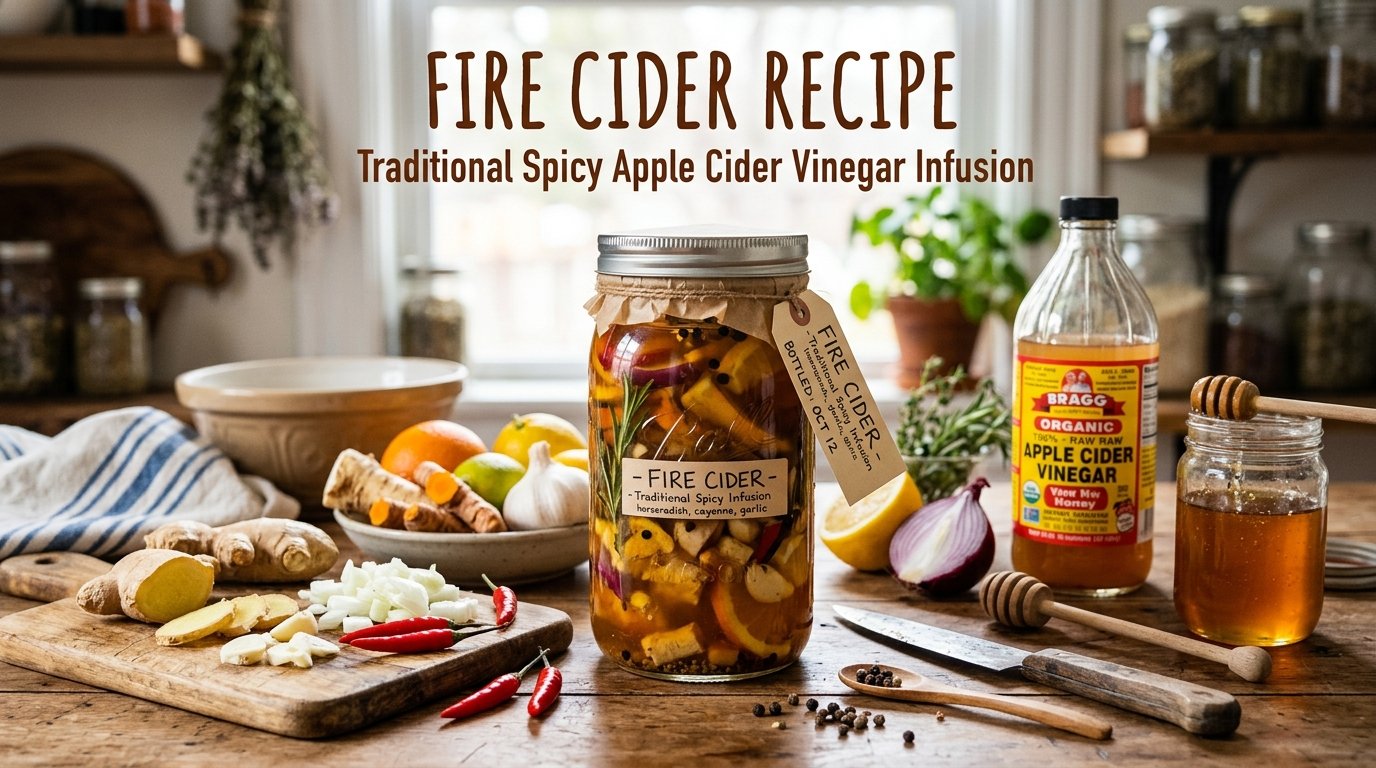
Fire Cider Recipe
A bold, spicy apple cider vinegar infusion made with ingredients such as ginger, garlic, onion, horseradish, and peppers. This version is intended as a flavored culinary vinegar, not as a treatment or cure for illness.
Important recipe update: For a safety-focused preparation, this recipe card follows the University of Minnesota Extension guidance of approximately 1 cup of added fruits and vegetables for every 2 cups of apple cider vinegar.
- Total Time: 10–30 days
- Yield: Approximately 2 cups before adjustments
Ingredients
- 2 cups food-grade apple cider vinegar
- Approximately 1 cup total of thinly sliced flavoring ingredients, such as:
- Fresh ginger
- Onion
- Garlic
- Fresh horseradish
- Hot pepper
- Lemon or other citrus, if desired
- 1–2 tablespoons honey, adjusted to taste after straining
Optional Flavor Additions
Use appropriate amounts while keeping the total quantity of fresh fruits and vegetables within the tested preparation ratio:
- Turmeric
- Rosemary
- Thyme
- Black peppercorns
Instructions
Step 1: Clean and Sanitize
Begin with a clean kitchen.
Clean and sanitize:
- Countertops
- Cutting boards
- Knives
- Utensils
- Food-grade jar
Wash fresh fruits and vegetables under clean running water before preparing them.
Step 2: Prepare the Flavoring Ingredients
Thinly slice the fresh ingredients.
Use approximately 1 cup of added fruits and vegetables for every 2 cups of apple cider vinegar to avoid overpacking the jar.
Place the prepared ingredients into a clean, sanitized jar.
Step 3: Heat the Vinegar
Heat the apple cider vinegar to approximately:
190–195°F (just below boiling).
Carefully pour the hot vinegar over the prepared ingredients.
According to the University of Minnesota Extension process, the entire mixture—including the center of the solid ingredients—should remain above 165°F for at least 1 minute and 12 seconds. Use a food thermometer rather than estimating the temperature.
Step 4: Infuse
Secure the clean lid.
Store the jar in a cool, dark location for 10–30 days.
The longer the infusion, the stronger the flavor generally becomes.
Step 5: Strain Thoroughly
After the desired infusion period, strain out all solid ingredients.
A fine strainer can remove larger pieces, while a coffee filter can help catch smaller particles.
Transfer the strained vinegar to a clean bottle or jar.
Step 6: Add Honey
Add honey gradually after straining.
Start with 1 tablespoon, taste, and add more if desired.
Stir until fully combined.
Notes
- Fire cider has a naturally strong, acidic, spicy flavor.
- Honey is optional and mainly helps balance the taste.
- Start with small culinary amounts if you are trying it for the first time.
- Do not describe fire cider as a proven immune booster, cold remedy, or medical treatment.
- Follow a tested food-safety process when making long-infused vinegar products.
Cleveland Clinic notes that there is no evidence that fire cider itself prevents or cures illness, even though many of its individual ingredients are commonly associated with nutrition or traditional wellness practices.
- Prep Time: 20 Minutes
- Cook Time: Heating Time: Approximately 10–15 minutes Infusion Time: 10–30 days
How We Researched This Recipe
This recipe article was developed using a combination of traditional fire cider preparation concepts and modern food-safety guidance.
The food-safety section was primarily based on the University of Minnesota Extension’s 2025 guidance for flavored vinegar fire cider, which addresses sanitation, ingredient ratios, heating temperatures, infusion time, straining, bottling, storage, and spoilage signs.
The health-information section was reviewed against evidence-based guidance from Cleveland Clinic, which explains that fire cider has not been proven to prevent or cure illness and may cause digestive discomfort or worsen acid reflux for some people.
References
University of Minnesota Extension: Flavored Vinegar Fire Cider Guidance
Cleveland Clinic: Fire Cider Benefits and Risks
Editorial Policy
At Moonlight For All, recipes are created for informational and culinary purposes.
We aim to:
- Avoid unsupported medical claims.
- Clearly separate culinary information from health advice.
- Use reliable food-safety sources when discussing storage and preservation.
- Update information when significant guidance changes.
- Present nutrition values as estimates when laboratory analysis is unavailable.
Fire cider should not be represented as a substitute for medical treatment, professional diagnosis, vaccination, or prescribed medication.