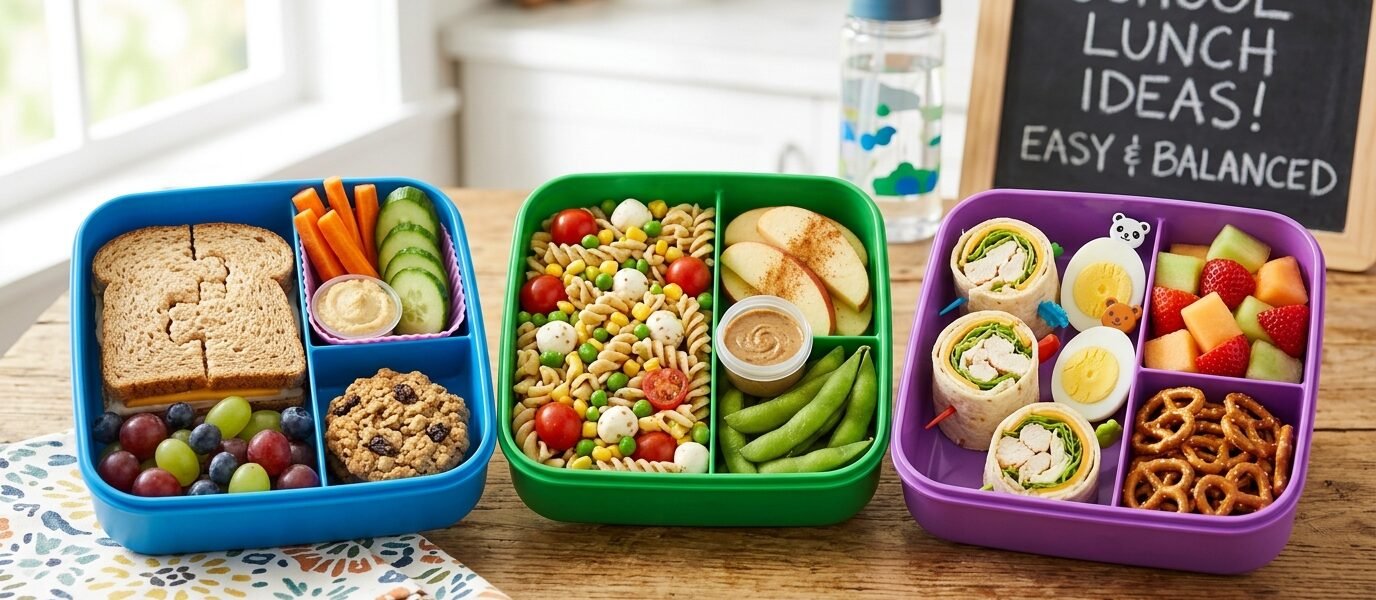

Packing a lunch box every school morning can become a daily challenge, especially when you’re trying to make meals that children will actually eat. The goal isn’t to create a perfect lunch every day. It’s to offer a practical combination of foods that provides variety, flavor, and enough nourishment to help children stay energized throughout their school day.
These kids lunch box meals are designed for busy families who want simple, appealing school lunches without spending hours in the kitchen. From colorful sandwiches and wraps to pasta, fruit, vegetables, yogurt, homemade snacks, and small treats, there are plenty of ways to keep lunch interesting.
A good lunch box can also be flexible. Some children love vegetables and fruit, while others are selective about textures, flavors, or unfamiliar foods. Instead of forcing children to eat a particular food, parents can offer familiar favorites alongside small portions of foods they are learning to enjoy.
Important: Children’s nutritional needs vary by age, growth, activity level, allergies, and individual circumstances. The ideas in this guide are general food suggestions, not individualized medical or nutritional advice.
My Experience Packing Kids’ Lunches
One thing I’ve learned from preparing children’s meals is that simple often works better than complicated.
A lunch box doesn’t need to contain a restaurant-style meal. A familiar sandwich, some fruit, a crunchy vegetable, and a small snack can make a satisfying combination. On particularly busy mornings, leftovers from dinner can also become an easy lunch the next day.
I’ve also found that presentation matters. Cutting sandwiches into small shapes, placing colorful fruit in separate sections, or allowing children to choose between two lunch options can make familiar foods more exciting.
The most useful approach is to create a collection of reliable lunch combinations and rotate them throughout the school week.
Why You’ll Love These Kids Lunch Box Meals
These ideas are designed to make school lunch preparation easier.
They’re practical
Most options use everyday ingredients that are easy to find at a regular grocery store.
They’re customizable
You can change the bread, protein, fruit, vegetables, or snack according to your child’s preferences.
They’re lunch-box friendly
Many ideas can be prepared ahead of time and packed in separate compartments.
They’re family-friendly
The same ingredients can often be used for breakfast, dinner, snacks, or adult lunches, helping reduce food waste.
They’re suitable for different preferences
You can create meat-based, vegetarian, egg-based, dairy-free, or nut-free combinations depending on your family’s needs and the school’s rules.
How to Build a Balanced Kids Lunch Box
Instead of worrying about creating a completely different meal every day, think about the lunch box as a combination of several food groups.
A simple framework is:
Main food + protein-rich food + fruit or vegetable + optional dairy/alternative + small snack
For example:
Whole-grain sandwich + boiled egg + cucumber + berries + yogurt
Or:
Chicken wrap + carrot sticks + apple slices + cheese
This flexible approach gives you many combinations without requiring a completely new recipe every morning.
1. Choose a Main Food
The main component provides substance and can be something your child already enjoys.
Ideas include:
- Whole-grain sandwich
- Chicken wrap
- Turkey sandwich
- Egg sandwich
- Cheese quesadilla
- Pasta salad
- Rice bowl
- Homemade mini pizza
- Bean and cheese wrap
- Chicken pasta
- Homemade savory muffins
If your child doesn’t like sandwiches, don’t force the lunch box into a sandwich-only routine. Pasta, rice, eggs, wraps, or leftovers can work just as well.
2. Add a Protein-Rich Food
Protein-rich foods can make lunch more satisfying.
Kid-friendly options include:
- Eggs
- Chicken
- Turkey
- Tuna
- Beans
- Lentils
- Chickpeas
- Cheese
- Greek yogurt
- Plain yogurt
- Hummus
- Nut or seed butter where permitted
For children with allergies, always follow their individual dietary requirements and your school’s allergy policies.
3. Add Fruit
Fruit adds natural sweetness, color, and variety.
Easy lunch box choices include:
- Apple slices
- Banana
- Strawberries
- Blueberries
- Grapes
- Orange segments
- Pear slices
- Mango
- Melon
- Kiwi
- Peaches
For younger children, prepare foods in an age-appropriate size and shape to reduce choking risk.
4. Add Vegetables
Vegetables don’t have to be complicated.
Try:
- Cucumber sticks
- Baby carrots
- Bell pepper strips
- Cherry tomatoes
- Steamed broccoli
- Snap peas
- Sweet corn
- Avocado
- Celery sticks
If your child currently refuses vegetables, start with a small amount alongside foods they already enjoy.
5. Add a Dairy or Alternative Food
Depending on your child’s diet and school requirements, you might include:
- Yogurt
- Cheese cubes
- String cheese
- Cottage cheese
- Fortified dairy alternative
Choose products according to your child’s nutritional needs and any allergy restrictions.
6. Add a Small Snack
A snack doesn’t have to mean cookies or candy.
Some simple choices include:
- Homemade oat bars
- Whole-grain crackers
- Air-popped popcorn for children who are developmentally ready
- Homemade muffins
- Energy bites
- Fruit
- Yogurt
- Cheese
- Unsweetened applesauce
A small homemade treat can also have a place in a balanced lunch box.
Easy Kids Lunch Box Combinations
Here are some simple combinations you can rotate throughout the week.
| Lunch Box | Main | Fruit/Vegetable | Extra |
|---|---|---|---|
| Classic | Turkey sandwich | Apple + cucumber | Yogurt |
| Chicken | Chicken wrap | Carrot sticks | Berries |
| Vegetarian | Hummus wrap | Bell pepper | Cheese |
| Egg | Egg sandwich | Grapes + cucumber | Crackers |
| Pasta | Chicken pasta | Broccoli | Orange |
| Mexican-Inspired | Bean & cheese quesadilla | Corn + avocado | Fruit |
| Snack Box | Cheese + crackers | Berries + cucumber | Yogurt |
| Leftover Lunch | Chicken and rice | Carrots | Fruit |
Kids Lunch Ideas for Picky Eaters
Picky eating is common during childhood, and children can have strong preferences for specific textures, temperatures, colors, and flavors.
Instead of completely changing the lunch every day, try creating a familiar + new combination.
For example:
Familiar: Cheese sandwich
New: A few cucumber slices
Or:
Familiar: Crackers
New: Small pieces of fruit
This gives children an opportunity to encounter new foods without making the entire lunch unfamiliar.
Helpful strategies
- Keep portions of new foods small.
- Offer familiar foods alongside unfamiliar foods.
- Don’t pressure children to finish everything.
- Vary presentation.
- Let children participate in choosing lunch options.
- Rotate foods rather than serving the exact same meal every day.
- Respect known allergies and food intolerances.
School-Friendly Lunch Box Foods
When packing food for school, consider more than nutrition.
Foods should ideally be:
- Easy to eat
- Easy to open
- Suitable for the child’s age
- Appropriate for the school’s food rules
- Easy to portion
- Reasonably mess-free
- Safe to store at the required temperature
A lunch that is nutritious but difficult for a child to open may come home untouched.
Allergy-Aware Lunch Box Planning
Food allergies require careful attention.
If your child’s school has a nut-free or allergen-restricted policy, follow it exactly. Don’t assume that a packaged food is safe simply because it doesn’t list the allergen as a main ingredient; check the label for allergen information and precautionary statements.
For children with diagnosed food allergies, follow the individualized plan provided by their healthcare team and school.
Nut-free alternatives may include:
- Sunflower seed butter
- Pumpkin seed butter
- Hummus
- Cheese
- Yogurt
- Egg
- Chicken
Always check school rules before packing any substitute.
Simple Lunch Box Formula for Busy Mornings
When you’re short on time, use this five-part formula:
1 main + 1 protein + 1 fruit + 1 vegetable + 1 optional snack
For example:
Chicken wrap + yogurt + strawberries + cucumber + homemade cookie
This formula gives you a starting point without requiring a complicated recipe.
What to Prepare the Night Before
A little preparation can make school mornings much easier.
You can prepare:
- Sandwich fillings
- Washed fruit
- Cut vegetables
- Hard-boiled eggs
- Pasta
- Chicken
- Homemade muffins
- Snack portions
- Yogurt containers
Pack only foods that remain safe under the appropriate storage conditions, and refrigerate perishable foods promptly.
20+ Easy Kids Lunch Box Meal Ideas
1. Chicken & Cheese Wrap
Fill a whole-grain tortilla with cooked chicken, cheese, lettuce, and cucumber. Slice it into small pinwheels or strips for easy eating.
Pair with: strawberries + yogurt.
2. Turkey & Cheese Sandwich
Layer turkey and cheese between two slices of bread and cut into triangles or fun shapes.
Pair with: apple slices + cucumber sticks.
3. Egg Salad Sandwich
Prepare an egg salad using chopped hard-boiled eggs and a simple dressing, then serve it in bread or a wrap.
Pair with: grapes + carrot sticks.
4. Hummus & Veggie Wrap
Spread hummus over a tortilla and add cucumber, bell pepper, and shredded carrot.
Pair with: berries + cheese cubes.
5. Chicken Pasta Box
Combine cooked pasta with diced chicken and a small amount of olive oil or a mild dressing.
Pair with: broccoli + orange segments.
6. Cheese Quesadilla
Fill a tortilla with cheese, cook until melted, and cut into triangles.
Pair with: avocado + corn + fruit.
7. Homemade Mini Pizza
Use a small pita or flatbread as the base. Add tomato sauce and cheese, then bake until the cheese melts.
Allow it to cool appropriately before packing.
8. Chicken & Rice Lunch Box
Pack cooked rice with diced chicken and a vegetable your child enjoys.
Pair with: cucumber + melon.
9. Chickpea Salad Wrap
Mash chickpeas lightly and combine them with a simple dressing before placing them inside a tortilla with lettuce.
Pair with: apple slices + yogurt.
10. Tuna & Cucumber Sandwich
Combine tuna with a suitable dressing and serve with cucumber in a sandwich.
Pair with: berries + whole-grain crackers.
Follow your school’s seafood rules and keep perishable foods properly chilled.
11. Breakfast-for-Lunch Box
Some children enjoy familiar breakfast foods at lunchtime.
Try:
- Mini pancakes
- Hard-boiled egg
- Banana slices
- Yogurt
- Whole-grain toast
This is especially useful when your child isn’t interested in traditional sandwiches.
12. Snack-Style Lunch Box
Create several small portions instead of one large meal:
- Cheese cubes
- Whole-grain crackers
- Cucumber
- Strawberries
- Hummus
- Homemade muffin
This format allows children to choose between several familiar foods.
13. Mini Sandwich Lunch Box
Make several small sandwiches using different fillings.
Try:
- Cheese
- Chicken
- Turkey
- Egg
- Hummus
Small portions can be easier for children to manage than one large sandwich.
14. Pasta Salad Lunch Box
Combine cooled cooked pasta with cucumber, bell pepper, sweet corn, and a mild dressing.
Add chicken, chickpeas, cheese, or another protein-rich ingredient if appropriate.
15. Bean & Cheese Wrap
Spread mashed or seasoned beans over a tortilla and add cheese.
Roll tightly and cut into small pieces.
Pair with: avocado + strawberries.
16. Chicken Sandwich Box
Use cooked chicken with lettuce and cheese in a sandwich.
Add:
- Apple slices
- Carrot sticks
- Yogurt
This is a simple combination that can be prepared the night before.
17. Egg & Cheese Wrap
Scrambled or hard-boiled egg can be combined with cheese in a tortilla.
Add cucumber or another vegetable on the side.
18. Leftover Lunch Box
Dinner leftovers can become one of the easiest school lunch ideas.
Suitable leftovers may include:
- Chicken and rice
- Pasta
- Homemade meatballs
- Vegetable noodles
- Bean dishes
- Quesadillas
Only pack leftovers that have been handled and stored safely and can be kept at an appropriate temperature until lunchtime.
19. Homemade Muffin Lunch Box
Pack a homemade savory or lightly sweet muffin with fruit, vegetables, and a protein-rich food.
Examples include:
- Banana oat muffin
- Zucchini muffin
- Cheese muffin
- Corn muffin
20. Chicken & Crackers Snack Box
For children who prefer small foods, combine:
- Cooked chicken pieces
- Whole-grain crackers
- Cheese
- Cucumber
- Berries
Cut foods appropriately for the child’s age and developmental stage.
21. Peanut-Butter Alternative Box
If permitted by your child’s school and appropriate for your family, serve seed butter with whole-grain crackers or bread.
For schools with strict nut restrictions, sunflower seed butter can be an alternative—but always check the school’s specific policy.
No-Cook Kids Lunch Box Meals
When you’re short on time, choose foods that require little or no cooking.
Option 1
Cheese + whole-grain crackers + grapes + cucumber + hummus
Option 2
Turkey slices + bread + strawberries + carrot sticks + yogurt
Option 3
Hummus + pita + cucumber + berries + cheese
Option 4
Yogurt + fruit + whole-grain crackers + cheese
Option 5
Chickpeas + cucumber + pita + orange slices
These combinations can be assembled quickly, provided perishable foods are kept at safe temperatures.
Make-Ahead Kids Lunch Box Meals
Meal preparation can reduce the morning rush.
Weekend Preparation
You can prepare several components in advance:
- Cook chicken
- Boil eggs
- Cook pasta
- Wash fruit
- Cut appropriate vegetables
- Prepare sandwich fillings
- Bake muffins
- Portion dry snacks
Store each item appropriately and assemble lunches as needed.
Kids Lunch Box Meals for Picky Eaters
If your child is selective, start with foods they already accept.
Familiar sandwich + new fruit
Cheese sandwich + a few berries
Familiar crackers + new protein
Favorite crackers + a small portion of hummus
Familiar fruit + new vegetable
Apple slices + two or three cucumber pieces
The aim is exposure rather than pressure.
A child may need repeated opportunities to become comfortable with a new food, so don’t assume that refusing a food once means they will never eat it.
How to Make Lunch Boxes More Appealing
Small changes can make familiar foods more interesting.
Cut Food Into Fun Shapes
Use cookie cutters to make sandwiches into:
- Stars
- Hearts
- Circles
- Animals
Use Color
A colorful lunch box can contain:
Red strawberries + green cucumber + yellow cheese + whole-grain bread.
Separate Foods
Some children dislike foods touching each other. A lunch box with separate compartments can help.
Let Kids Choose
Offer two acceptable choices:
“Do you want chicken or cheese in your wrap?”
This gives children some control while keeping the options practical.
Expert Tips for Better School Lunches
Don’t Pack Too Much
An oversized lunch box can overwhelm children and create unnecessary food waste.
Start with portions that match what your child generally eats and adjust according to their appetite and needs.
Consider the Lunch Period
If children have only a short amount of time to eat, choose foods that are quick and easy to open and eat.
Practice Opening Containers
Before school starts, let your child practice opening:
- Lunch boxes
- Water bottles
- Yogurt containers
- Snack bags
- Food containers
A child who can manage their lunch independently is less likely to struggle during the lunch period.
Keep Textures in Mind
Some children prefer crunchy foods, while others prefer soft foods. Mixing several textures can make the lunch more appealing.
Food Safety for Kids’ Lunch Boxes
Food safety is particularly important when packing perishable foods such as meat, eggs, dairy products, and cooked leftovers.
Use an Insulated Lunch Bag
Perishable foods should not simply sit at room temperature for the entire school day.
Add Cold Packs
Use sufficient frozen gel packs or another appropriate cold source to keep perishable foods cold.
Keep Hot Foods Hot
If packing a hot meal, use a properly preheated insulated food container designed to keep food hot.
Wash Hands
Wash hands before preparing and packing food.
Keep Raw and Ready-to-Eat Foods Separate
Prevent cross-contamination during preparation.
Follow School Policies
Some schools restrict specific foods because of allergies or other safety considerations. Always follow the school’s current rules.
Common Lunch Box Mistakes
Packing Only One Food
A child may eat the sandwich and leave the rest—or vice versa.
Offering a combination of foods gives more variety.
Trying Too Many New Foods at Once
A completely unfamiliar lunch may be rejected.
Include at least one familiar food.
Forgetting Temperature Control
Perishable foods need appropriate temperature control throughout the school day.
Ignoring Your Child’s Preferences
Healthy lunch ideas still need to be realistic for the child eating them.
Making Lunch Too Complicated
You don’t need a Pinterest-perfect lunch every day. A simple, balanced combination can be just as useful.
The Simple Formula to Remember
When you’re standing in the kitchen at 7 a.m. wondering what to pack, remember:
MAIN + PROTEIN + FRUIT + VEGETABLE + OPTIONAL SNACK
For example:
Chicken wrap + yogurt + strawberries + cucumber + homemade cookie
That’s it. You don’t need a completely new recipe every morning.
Nutrition Guide for Kids’ Lunch Boxes
A nutritious lunch box doesn’t need to be complicated. Aim for variety across the day and week, rather than trying to make every individual lunch perfectly balanced.
A practical lunch can include:
- A carbohydrate-rich food: bread, tortilla, rice, pasta, potatoes, or crackers
- A protein-rich food: eggs, chicken, beans, chickpeas, yogurt, cheese, or other suitable options
- Fruit: fresh or appropriately prepared fruit
- Vegetables: cucumber, carrots, peppers, tomatoes, broccoli, or another accepted vegetable
- Optional dairy or alternative: yogurt or cheese
- Optional treat: a small homemade cookie, muffin, or other family-approved snack
Children’s appetite can vary considerably from day to day. Let appetite and age-appropriate needs guide how much you pack rather than expecting children to finish everything.
Looking for a homemade lunchbox treat? Try our Back to School Cookies with a free printable lunchbox note.
What Makes a Good Kids Lunch Box Meal?
A good kids lunch box meal is one that combines foods your child enjoys with opportunities to eat a variety of nutritious foods. It should also be easy for the child to open, eat, and manage independently.
Easy Kids Lunch Box Formula
Main + Protein + Fruit + Vegetable + Optional Snack
For example:
Chicken wrap + yogurt + strawberries + cucumber + homemade cookie
This simple formula can be adapted to almost any child’s preferences.
5-Day Kids Lunch Box Plan
| Day | Main | Protein-Rich Food | Fruit | Vegetable | Optional Extra |
|---|---|---|---|---|---|
| Monday | Chicken wrap | Chicken + cheese | Strawberries | Cucumber | Yogurt |
| Tuesday | Egg sandwich | Egg | Apple | Carrots | Crackers |
| Wednesday | Chicken pasta | Chicken | Orange | Broccoli | Cheese |
| Thursday | Bean quesadilla | Beans + cheese | Grapes | Avocado | Yogurt |
| Friday | Turkey sandwich | Turkey + cheese | Berries | Bell pepper | Homemade muffin |
Tip: These are examples, not fixed requirements. Swap foods according to your child’s preferences, allergies, cultural foods, school rules, and what you already have at home.
How to Make Kids Lunches More Nutritious
Small changes can improve variety without making lunch complicated.
Add More Color
Try combining several naturally colorful foods such as berries, cucumber, carrots, peppers, oranges, or tomatoes.
Choose Whole-Grain Options When Appropriate
Whole-grain bread, tortillas, crackers, pasta, and other grains can provide more fiber than their refined counterparts.
Include Protein-Rich Foods
Eggs, chicken, beans, chickpeas, yogurt, and cheese can be convenient additions.
Include Fruit and Vegetables
Offer foods your child already enjoys while continuing to provide opportunities to try different varieties.
Keep Added Sugar in Perspective
Drinks and snacks can contribute substantial added sugar. Water is a simple everyday beverage choice, while other foods can provide sweetness through fruit.
Lunch Box Food Safety
Food safety is one of the most important parts of preparing school lunches.
Keep Perishable Foods Cold
Foods such as meat, eggs, dairy products, and cooked leftovers should be kept cold using an insulated lunch bag and appropriate cold sources.
Wash Produce
Wash fruits and vegetables before packing them.
Keep Hands and Surfaces Clean
Wash hands and clean preparation surfaces before preparing lunch.
Use Clean Containers
Clean lunch boxes and food containers thoroughly after each use.
Don’t Rely on Smell Alone
Food can become unsafe without obvious changes in smell or appearance. Follow recommended temperature and storage practices instead.
Follow School Allergy Policies
If your child’s school prohibits nuts or other allergens, follow its current rules carefully.
You can also check:
- Zucchini Bread Recipe
- Mexican Omelet Recipe
- Chickpea Salad Recipes
- Keto Tortilla Recipes
- Healthy Smoothie Recipes
- Free Printable Lunchbox Notes
- Easy Family Dinner Recipes
Frequently Asked Questions
What are some healthy lunch box ideas for kids?
Healthy lunch box ideas can include chicken wraps, egg sandwiches, hummus and vegetable wraps, pasta with chicken, bean-and-cheese quesadillas, yogurt with fruit, cheese and whole-grain crackers, and appropriately portioned leftovers.
What should I put in my child’s lunch box?
A simple formula is one main food + one protein-rich food + fruit + vegetable + an optional snack. Adjust the combination according to your child’s preferences, age, allergies, appetite, and school requirements.
What can I pack for a picky eater?
Start with foods your child already accepts and add a small amount of a less familiar food. For example, pair a favorite cheese sandwich with a few cucumber slices or berries. Avoid pressuring a child to eat a particular food.
What are easy school lunch ideas?
Easy options include sandwiches, wraps, quesadillas, pasta, cooked chicken and rice, hummus with pita, eggs with crackers, yogurt with fruit, and leftovers that can be stored safely.
How can I make school lunches more interesting?
Use different shapes, colors, textures, and food combinations. Let your child choose between two suitable options and occasionally include a small homemade treat.
What are good no-cook lunch box meals?
No-cook combinations can include hummus with pita and cucumber, cheese and whole-grain crackers with fruit, yogurt with berries and crackers, or cooked chicken or turkey slices with bread and fresh vegetables.
Can I pack leftovers for my child’s school lunch?
Yes, leftovers can be convenient school lunches when they have been handled safely and can be kept at an appropriate temperature until they are eaten.
How do I keep my child’s lunch cold?
Use an insulated lunch bag with an adequate cold source for perishable foods. Follow food-safety guidance for keeping foods such as meat, eggs, dairy, and cooked leftovers at safe temperatures.
What foods should not go in a lunch box?
There isn’t one universal list because school policies and children’s needs differ. Avoid foods that conflict with school allergy policies or that cannot be kept safely at the required temperature.
How much food should I pack for my child?
There is no single portion size that works for every child. Consider age, appetite, activity level, individual nutritional needs, and what your child normally eats. Start with manageable portions and adjust based on experience.
References
For food-safety information, useful authoritative resources include:
- USDA Food Safety and Inspection Service — guidance on safe food handling and packed foods.
- U.S. Food and Drug Administration (FDA) — food safety and food-allergy information.
- Centers for Disease Control and Prevention (CDC) — information related to children’s nutrition and food safety.
- American Academy of Pediatrics (AAP) — general child nutrition resources.
How We Researched This Guide
This guide was developed around practical school-lunch planning principles: food variety, child preferences, meal convenience, age-appropriate preparation, allergy awareness, and food safety.
The recommendations are intended as general food-planning guidance, not individualized nutritional advice. Children’s nutritional requirements differ, so families should seek personalized guidance from a qualified pediatric healthcare or nutrition professional when needed.
Editorial Policy
Our food content aims to provide clear, practical, and useful information based on established cooking and food-safety principles.
We avoid presenting general food suggestions as medical advice. Recipes and nutrition information may vary depending on ingredients, brands, serving sizes, and preparation methods.
Readers should always check packaged-food labels for allergens and follow current school food policies.